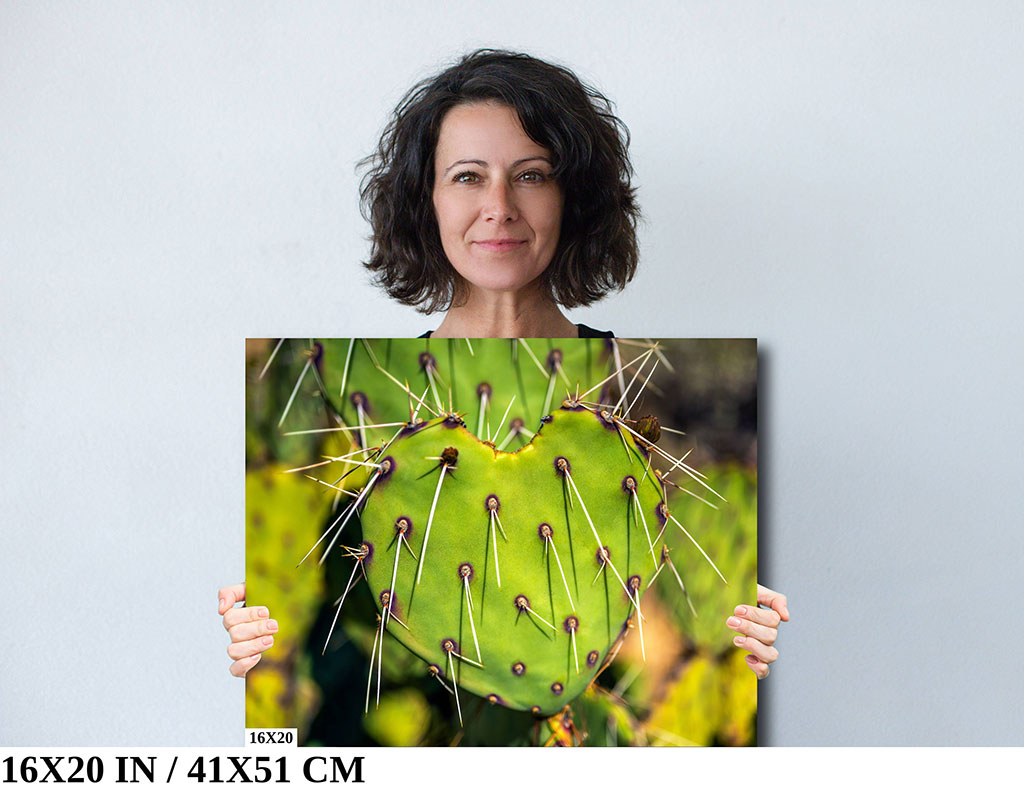
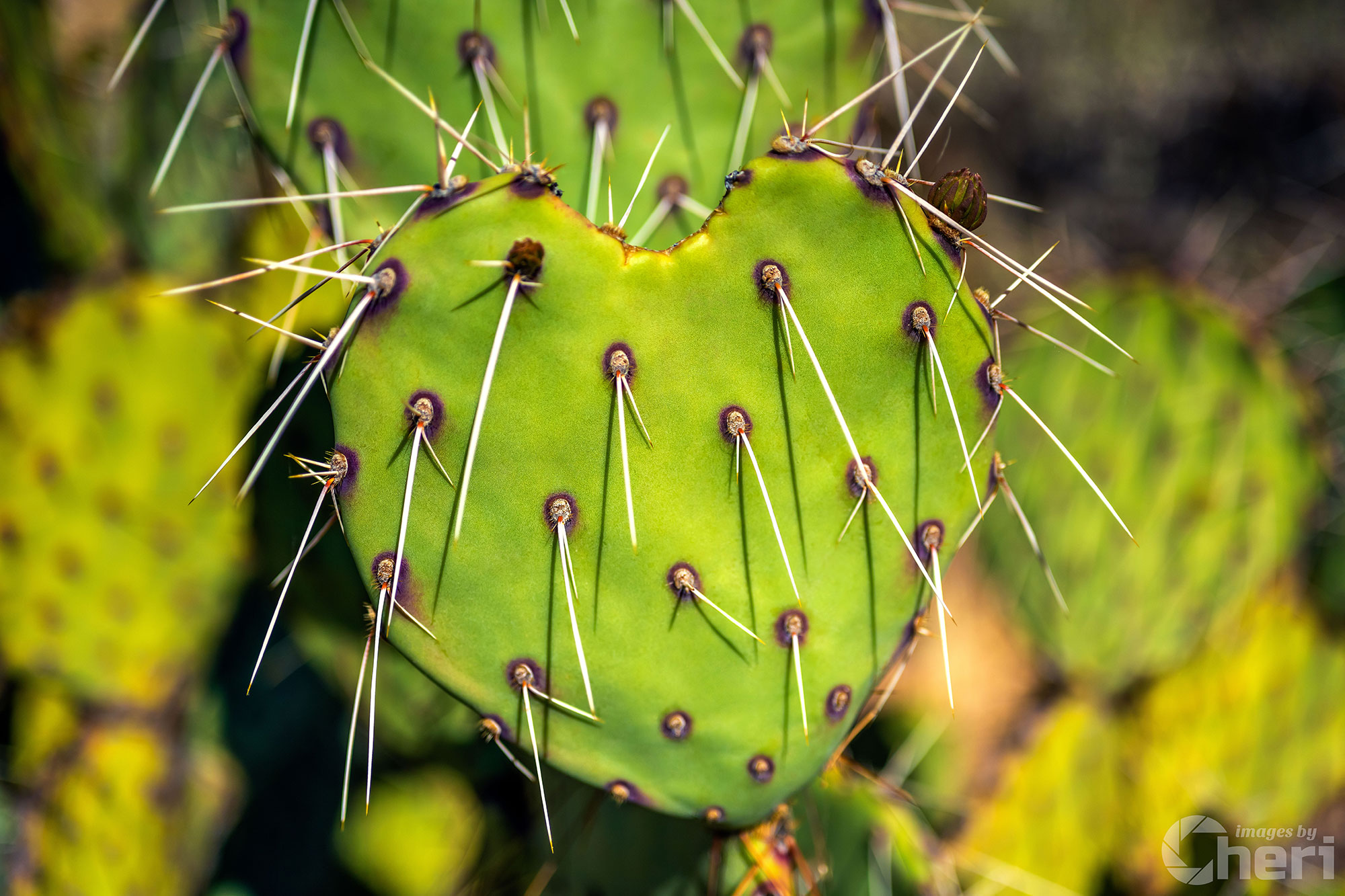
A Heart-shaped Prickly Pear Cactus stood out on a recent trip to Saguaro National Park.
As I entered Saguaro National Park East, the first thing that struck me was the sheer vastness of the area. Endless stretches of Saguaro cacti, with their majestic arms reaching towards the sky, created a mesmerizing sight. The golden hues of the desert bathed the landscape in a warm glow, casting long shadows that added depth to the scenery.
As I strolled along the trails, I marveled at the resilience and grandeur of the saguaro cacti. These giants of the desert can reach heights of up to 40 feet (12 meters) and have a lifespan that spans over 150 years. They serve as important ecological pillars, providing shelter and sustenance for a multitude of desert creatures, including birds, bats, and insects.
Amidst the sea of star Saguaros, I spotted an enchanting Prickly Pear Cactus with a unique heart-shaped petal. Its form stood out from the rest, resembling a heart captured in nature’s embrace. The discovery filled me with a sense of awe, as I realized the beauty that can be found in the intricate details of the desert.
Carefully, I approached the Cactus, ensuring not to disturb the delicate desert ecosystem. I set up my camera, adjusting the settings to capture the essence of this remarkable creation. With the click of the shutter, I immortalized the cactus, freezing its distinctive shape in time.
I have been fortunate to capture the essence of many breathtaking landscapes and extraordinary flora.
The Prickly Pear Cactus, scientifically known as Opuntia, is a marvel of nature’s ability to thrive in harsh environments.
One of the most intriguing aspects of the Prickly Pear Cactus is its edibility.
While most cacti are not considered appetizing, this particular species has found its way into the culinary world.
The young pads, known as nopales, are not only visually appealing but also offer a unique taste. When cooked properly, they provide a tangy, slightly citrus-like flavor and a satisfying crunch.
They are often used in salads, soups, stews, and even as a filling for tacos. It’s fascinating to think that a plant covered in spines can yield such a delightful culinary experience.
The Prickly Pear Cactus also has a long history of being used for medicinal purposes.
The vibrant fruits, known as prickly pears or tunas, are not only visually stunning but also packed with nutrients. They are rich in antioxidants, vitamins, and minerals.
The juice derived from these fruits has been used to treat ailments such as upset stomachs, high cholesterol, and inflammation. It’s fascinating to see how nature provides us with solutions even in the harshest environments.
My encounter with the Heart-Shaped Prickly Pear Cactus at Saguaro National Park was a memorable experience.
Through my lens, I was able to appreciate its resilience, unique beauty, and its surprising culinary and medicinal applications.
The world of plants never ceases to amaze me, and the Prickly Pear Cactus is undoubtedly a testament to the wonders of nature.
So, next time you come across a Prickly Pear Cactus, take a moment to admire its tenacity, and remember that beauty and usefulness can emerge even from the harshest conditions.
Nature’s creations, like this resilient plant, are bound to inspire and captivate those who are willing to look closer and appreciate the remarkable stories they have to tell.
Photographing the Prickly Pear Heart-Shaped Cactus was a reminder of the intricate beauty and resilience of the natural world. It taught me to appreciate the small miracles that can be found in unexpected places. As I continued my exploration of Saguaro National Park, I couldn’t help but feel grateful for the opportunity to capture such extraordinary cacti and share it with the world through my photography.
Like this photo? Purchase the photo on our Website or on our Etsy Store.