
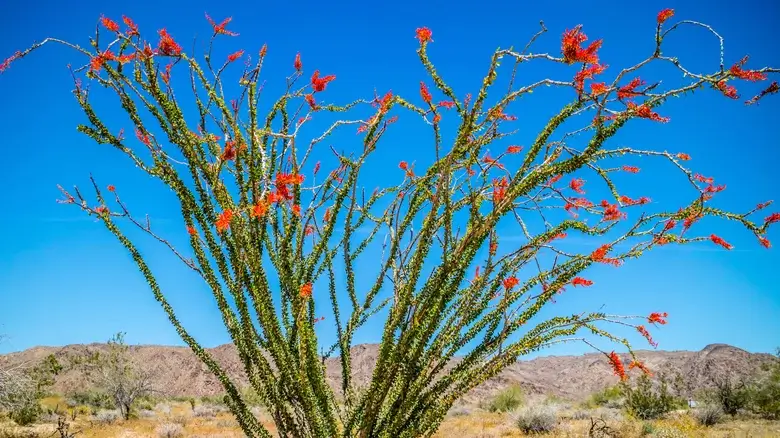
Desert landscaping brings a set of challenges that gardeners in more verdant regions don’t have to consider. Low rainfall totals limit your choices to drought-tolerant plants and hardscaping with rocks, patios, or pavers, unless you have the resources for near-constant watering or access to an irrigation specialist. One remarkable plant, the ocotillo (Fouqeieria spendens), can appear almost dead until it rains. With a douse of water, vivid, red-orange flowers spring from the tips of the plant’s long, spiny canes while green leaves sprout along their length. The foliage and tubular flowers can last for about a month before the deciduous bush returns to its colorless state. Ocotillo will entice pollinators attracted by the flower’s nectar, such as hummingbirds and bees. You can also pair them with other drought-tolerant plants that thrive without much water like creosote bush (Larrea tridentata) and night-blooming cereus (Peniocereus greggii).
Growing ocotillo in your hot yard
March through May is the best time to plant drought-tolerant plants, including ocotillo. However, they can still be planted year-round in full sun and sandy or loamy well-drained soil. Dig a hole that is just wide and deep enough to contain the root system. If you know what the original orientation of the plant was, if, for instance, you’re using a transplant from a neighbor’s yard rather than a nursery plant, replant it in the same orientation — the north-facing side of the plant should still face north in its new location. Test the hole’s drainage by filling it with water and waiting for the water to completely seep into the surrounding soil. If it takes less than an hour, it’s a good spot for the ocotillo.