
The strongest downtowns are recognizable before anyone reads the town name. Galena has blocks of 19th-century brick storefronts below steep hills. Jim Thorpe’s commercial district sits in a narrow valley crowded with Victorian architecture. In Lake Placid, Main Street runs beside Mirror Lake, and in Marquette the streets drop toward an enormous ore dock on Lake Superior. The 11 towns below earned a place for the appearance of their downtowns and for the museums, historic buildings, local businesses, and parks concentrated around their central streets.
Stillwater, Minnesota
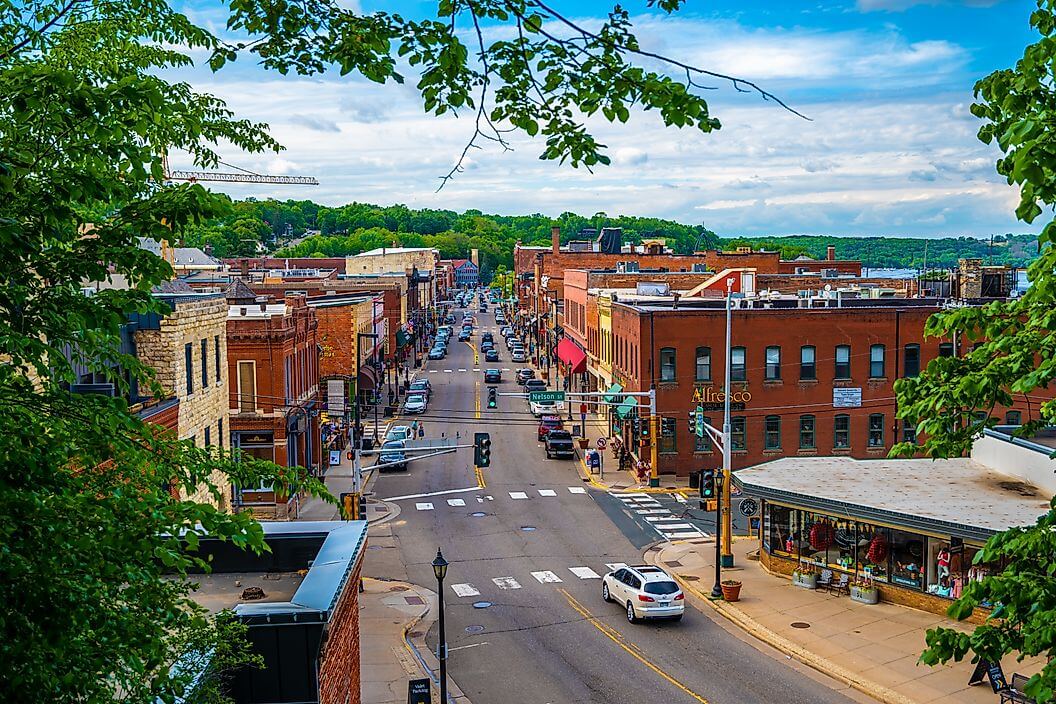
Stillwater‘s geography is easiest to read from its riverfront. The St. Croix River runs beside downtown, Main Street sits one block inland, and a steep bluff rises behind the commercial buildings. Public staircases connect the lower streets with the neighborhoods above them.
The Stillwater Lift Bridge, completed in 1931, now carries pedestrians and cyclists across the St. Croix. From the bridge, visitors get a broad view of downtown’s brick buildings on the Minnesota side and the wooded Wisconsin shoreline across the river.
Back on shore, Lowell Park runs along the water near Main Street, a good place to watch river traffic before heading into the commercial district, where antique shops have long been part of Stillwater’s downtown identity.
Those willing to tackle the stairs behind downtown get a very different photograph. From higher ground, Main Street appears compressed between the bluff and the river, with the Lift Bridge crossing the St. Croix below.